Saturday, February 24th Fullerton California at 5:00 pm
Historical Resources: Detective's All-Access Toolkit
Embracing Fullerton's Glamorous Past: 1920s Celebrities, Premieres, Baseball Legends, Speakeasies, and Spirit Mysteries.
"Let our history Inspire our future."
Get Ready to See Spirits of Fullerton's Past

Fullerton's Tinsel Town History
Fullerton in the Early 20th Century
In the early 1900s, Fullerton, California, transformed from a quiet agricultural community into a vibrant cultural hub. It became a scenic backdrop for silent films, tapping into the burgeoning film industry's growth in California. The jazz era saw Fullerton's clubs and venues alive with new musical rhythms, contributing to a lasting legacy of live performance arts. The California Hotel stood as a social epicenter, hosting events that drew locals and visitors alike. This era also saw baseball legends like Walter Johnson enhance the city's sports culture. Amidst this, the Prohibition era's speakeasies added a clandestine charm, becoming lively spots for jazz and social gatherings. Fullerton, in these years, mirrored and contributed to the dynamic cultural shifts of early 20th-century America.
Fullerton Fox Theater Premieres Hollywood Legends
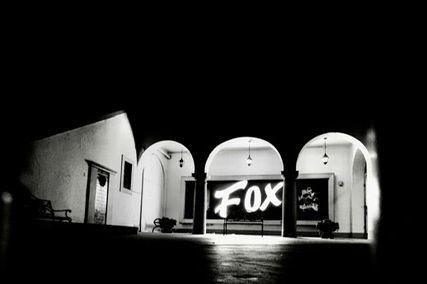
The Fox Theatre in Fullerton, California, which first opened its doors as the Alician Court Theatre on May 28, 1925, is not just a historical landmark but a bridge between the quaint charm of Fullerton and the glitz of Hollywood. This architectural masterpiece was commissioned by C. Stanley Chapman and brought to life by Raymond Kennedy of Meyer & Holler, the same firm that crafted Hollywood’s legendary Grauman’s Chinese Theatre and the Egyptian Theatre. This connection to Tinseltown's iconic venues infuses the Fox Theatre with a touch of Hollywood glamour.
The Fox Fullerton stands as a testament to Italian Renaissance elegance, designed by the acclaimed architect Raymond M. Kennedy. Its lavish interiors welcomed silent film aficionados who were serenaded by orchestras as movie magic flickered across the screen. Esteemed movie stars like Mary Pickford and Douglas Fairbanks graced the theatre with premieres, enchanting audiences and adding to the theatre's prestige. Other celebrities who visited the prestigious Fox theater include Clara Bow, Clark Gable, Ginger Rogers, Judy Garland, Mickey Rooney, Jayne Mansfield, Telly Savalas, Janet Gaynor, Dolores Del Rio, Reginald Denny, Florence Roberts, Harold Lloyd, Laurel Goodwin, and Fullerton’s own Tommy Lasorda and Steven Peck (https://www.foxfullerton.org/about/) The Fox wasn’t merely a cinema; it was an experience, wrapping patrons in the opulence of Hollywood’s golden era.
Vaudeville Acts: The Fox and the Plummer Auditorium, hosted various vaudeville acts and traveling performers in the early 20th century. Vaudeville featured a wide range of greats such as Buster Keaton. Acts performed included a wide range of acts from comedians to magicians and acrobats. The Fox Fullerton Theatre is a narrative of endurance, having survived the advent of "talkies" and the multiplex cinema era. It remains a monument to the town's cinematic golden age, echoing with the laughter and applause that once greeted silver screen legends.
Jazz Era
Fullerton, California, has long been a hub for jazz, hosting numerous renowned musicians. Steamers, a now-closed yet celebrated jazz club, saw performances by Joe Pesci, Diana Krall, Poncho Sanchez, Jeff Hamilton, Terry Gibbs, Buddy DeFranco, and George Cables. This vibrant jazz culture in Fullerton intertwines with the legacy of Charlie Chaplin, who significantly contributed to film music, composing scores that deepened the emotional resonance of his silent films. This historical tapestry was further enriched by Duke Ellington's Orchestra's performance at Cal State Fullerton's Meng Concert Hall. A special moment at this concert was the presence of vintage "Mood Indigo" sheet music from 1931, later signed by orchestra members, bridging the golden jazz age with Chaplin’s era of silent cinema. This event celebrated Ellington's musical brilliance and mirrored the artistic spirit of Chaplin's time, emphasizing music as a pivotal element in film. This performance at Cal State Fullerton, attended by jazz enthusiasts and students, showcased the enduring influence of jazz in Fullerton's cultural landscape.(https://calstate.fullerton.edu/news/Inside/2009/dave-reid-supports-csuf-jazz.html#:~:text=The%20audience%20that%20gathered%20Sunday,by%20each%20of%20the).
Celebrities of 1920's Fullerton

Buster Keaton
Douglas Fairbanks
Buster Keaton
Born in 1895, Buster Keaton's journey from vaudeville, where he perfected physical comedy, to silent film stardom in the 1920s is legendary. While his performances likely graced theaters like the historic Fullerton Fox Theater in California, his lasting impact on comedy and cinema endures as his legacy.
Mary Pickford
Douglas Fairbanks
Buster Keaton
Mary Pickford named America’s sweetheart. She along with Charlie Chaplin, Douglas Fairbanks, and D.W. founded United Artists, a groundbreaking independent film company that allowed artists to have more control over their work. Throughout the 1920s, Pickford remained one of the most popular and successful actresses in Hollywoo
Mary Pickford named America’s sweetheart. She along with Charlie Chaplin, Douglas Fairbanks, and D.W. founded United Artists, a groundbreaking independent film company that allowed artists to have more control over their work. Throughout the 1920s, Pickford remained one of the most popular and successful actresses in Hollywood, earning her the nickname "America's Sweetheart. She premiered her silent film at the Fox theater in Fullerton in 1927
Douglas Fairbanks
Douglas Fairbanks
Douglas Fairbanks
Douglas Fairbanks was a silent movie icon renowned for his swashbuckling roles in classics like "The Mark of Zorro" and "The Thief of Bagdad." He co-founded United Artists with Mary Pickford, Charlie Chaplin, and D.W. Griffith, empowering filmmakers. Fairbanks attended the Fox Theater for the premiere of Mary Pickford's film, demonstratin
Douglas Fairbanks was a silent movie icon renowned for his swashbuckling roles in classics like "The Mark of Zorro" and "The Thief of Bagdad." He co-founded United Artists with Mary Pickford, Charlie Chaplin, and D.W. Griffith, empowering filmmakers. Fairbanks attended the Fox Theater for the premiere of Mary Pickford's film, demonstrating their close relationship within the film industry. His influence on early Hollywood is unforgettable.
Ghosts of Fullerton
The Villa Ghost of the California Hotel
The Villa Ghost of the California Hotel
The Villa Ghost of the California Hotel
A somber tale surrounds a maintenance worker who met a tragic end by his spouse on their property, leading to her own demise. This information, initially hidden to prevent negative publicity, was later confirmed by Charles Chapman. The story of the Villa's Ghost grew, with many claiming to have encountered the specter. This chilling legen
A somber tale surrounds a maintenance worker who met a tragic end by his spouse on their property, leading to her own demise. This information, initially hidden to prevent negative publicity, was later confirmed by Charles Chapman. The story of the Villa's Ghost grew, with many claiming to have encountered the specter. This chilling legend became part of literature and ghost tours, reinforcing its eerie authenticity. Adding to Fullerton's haunted reputation are The Cellar Restaurant, Brownstone Café, and Café Hidalgo, each contributing to the town's enigmatic and ghostly charm. One photographer caught flickering cube 1 flickering cube 2 at a spot where a death occurred (Museum Ghost Tour, Feburary 2022)
Fullerton Observer MIKE RITTO ON OCTOBER 20, 2022 •
Lillian Yaeger
The Villa Ghost of the California Hotel
The Villa Ghost of the California Hotel
Lillian Yaeger, a pioneering figure in Fullerton, California, made her mark in the early 20th century. In 1919, she established a Dodge Brothers car dealership, becoming one of the area's first car drivers and Orange County's inaugural service station operator. Known for her colorful language, Yaeger's residence at 108 West Brookdale Plac
Lillian Yaeger, a pioneering figure in Fullerton, California, made her mark in the early 20th century. In 1919, she established a Dodge Brothers car dealership, becoming one of the area's first car drivers and Orange County's inaugural service station operator. Known for her colorful language, Yaeger's residence at 108 West Brookdale Place is now famous for purported paranormal activity, with reports of mysterious movements and unexplained noises, contributing to Fullerton's haunted mystique. These tales of Yaeger and her home highlight the intersection of local history and ghost lore in the region.
- "There’s Something Strange in the Neighborhood." Fullerton Observer. Fullerton Observer website.
- "Fullerton’s Female Trailblazers!" Fullerton Public Library.
The Baby Boos of the Brownstone
The Villa Ghost of the California Hotel
The Baby Boos of the Brownstone
At the historic Brownstone Cafe in California, a series of paranormal incidents has captivated both owners and patrons. One evening, the owners witnessed a bizarre event: grapes began levitating and zipping across the room, an occurrence that has become a frequent spectacle. Following this, the cafe experienced another unusual phenomenon
At the historic Brownstone Cafe in California, a series of paranormal incidents has captivated both owners and patrons. One evening, the owners witnessed a bizarre event: grapes began levitating and zipping across the room, an occurrence that has become a frequent spectacle. Following this, the cafe experienced another unusual phenomenon involving kitchenware. Pots and pans were not only clanging but also flying through the air, seemingly of their own accord. Intrigued, the owners called in a medium, who suggested that these playful antics might be the work of childlike spirits from the 1920s. This led to the affectionate nickname 'Baby Boos' for the ghostly entities, a term being adopted by the cafe's after hearing the story.
These charming, recurring incidents have given the Brownstone Cafe a whimsical aura, turning it into a beloved haven for those fascinated by the paranormal, all eager to catch a glimpse of the 'Baby Boos' or the enchanting dance of the flying grapes.
Get Ready to See Spirits of Fullerton's Past
California Hotel
Williams Building and the Spirits at the SpeakEasy
Williams Building and the Spirits at the SpeakEasy

A short walk away, the California Hotel offered a Spanish Colonial Revival sanctuary to the stars that shone at the Fox. Its luxurious accommodations were a home away from home for celebrities such as Clark Gable, Babe Ruth, and its ballrooms hosted Fullerton’s elite. It provided a discreet, opulent backdrop to the drama and jubilation of the movie industry.---
The California Hotel, an emblem of enduring hospitality, has been a favored choice for residents seeking both short and long-term stays. Housing 22 distinct apartments, this historic establishment offered rentals from $40 to $50 per month, catering to a range of preferences with both furnished and unfurnished options. The rental package included the convenience of a maid service. Each living space was thoughtfully designed with a living area, bathroom, dressing room, and a kitchen that featured a quaint breakfast nook, elegant dresser, and a Murphy bed, reflecting the hotel's commitment to providing the comforts of home without the attendant responsibilities.
Every apartment came with the luxury of a private telephone, and in the advent of television, the hotel cultivated a sense of community with a common television in the spacious lobby. Since 1922, the hotel has offered a shuttle service from the train station and later expanded its services to include an airport coach to Los Angeles Airport, all for an economical $3.25.
The California Hotel Café, which was later rebranded as the California Cafeteria, stood out as the most popular amenity within the hotel. Overseen by the renowned Chef Henry F. Strombeck, this dining facility became synonymous with high-class cuisine set against a backdrop of elegance and sophistication. The café provided daily culinary delights from breakfast through dinner and was an ideal venue for private parties and banquets, solidifying its place in Fullerton's rich tapestry of history..
On the Hidden past of The California Hotel in Fullerton, Californian, appears to have had a colorful past, marked by notable incidents involving illegal activities and celebrities. One of the most bizarre stories associated with the hotel is that of the chloroform burglars. In late June and early July 1927, Hollywood director Ralph Ince, known for his role in "Little Caesar," was staying at the hotel. During this period, he was directing and starring in a film called "Shanghai," with his crew being filmed at nearby locations. On June 30, 1927, after returning to the hotel, an odd smell of chloroform was noticed coming from his room. It was discovered that he had been knocked out by chloroform sprayed into his room, which also resulted in scratches on the door.
In addition to this criminal activity, the hotel also saw its share of illegal alcohol transactions during the Prohibition era. Despite Fullerton being a "dry" town, hotel guests were able to obtain liquor. Hotel clerk Arthur Hayes was arrested in November 1924 for selling whiskey, and speakeasies were conveniently located nearby. The California Hotel has left an indelible mark on Fullerton’s history, remembered for its elegance and as a cornerstone of the community’s social life. (Fullerton Heritage, Deborah Richey, February, 2023) and courtesy of Orange County Historic Society
Williams Building and the Spirits at the SpeakEasy
Williams Building and the Spirits at the SpeakEasy
Williams Building and the Spirits at the SpeakEasy
In stark contrast to the opulent establishments of the era, the multifaceted Williams Building, under the ownership of the Odd Fellows in the 1920s, held a secret double life. By day, it bustled as the town's postal hub, a thriving center of community life. The Odd Fellows operated the downstairs as a post office until the Great Depression, while the third floor was leased to a variety of social clubs, including the Moose, Elk, Veterans of the Foreign War, Women of the Moose, and even the enigmatic Ancient Egyptian Order of the Sciots.
Throughout the years, performers such as Tommy Alsuff, Chubby Checker, Buddy Holiday and the Crickets played at this vibrant place for private parties hosted at this illustrious location.
But by night, the Williams Building underwent a remarkable transformation into a Prohibition-era speakeasy. It throbbed with illicit revelry and echoed with the rhythmic beats of the Charleston dance. Upstairs on the third floor, a concealed attic played a pivotal role in the clandestine operation. A secret door connected the attic to the bar below, where liquor was surreptitiously stored to avoid detection. The attic boasted hatches leading to the roof and a discreet ladder connecting it to the ground floor—a covert escape route in case of a police raid.
Today, this historic space houses the Charleston Event Center, Bowery Pizza, and Bourbon Street Restaurant, seamlessly blending the intrigue of the past with contemporary vibrancy.
Yet, the Williams Building is not only known for its colorful history; it has gained a reputation for being haunted. Visitors have reported unexplained phenomena, including lights flickering on and off, doors opening and closing by themselves, sudden drops in temperature that send chills down one's spine, mysterious leaks in the rooms, and a feeling of being trapped with no escape. Some have even claimed that coins materialize out of thin air, inexplicably dropping from the ceiling. To further verify a Medium came in at night and confirmed spiritual presence. She confirmed that the spirits are there for the parties and fun. They refuse to leave . The building's enigmatic past continues to cast its spectral shadow on the present.
Early Luminaries of Fullerton from 20th Century
Williams Building and the Spirits at the SpeakEasy
Early Luminaries of Fullerton from 20th Century
The reporter from Mystery Marvel's Night of Mystery, Dinchel, is a nod to Hugh Edgar Johnson (1868-1935) A colorful character in a colorful period of journalism, Hugh Edgar Johnson was the personification of an early American country newspaper editor and proprietor. In the early days of the newspaper, Johnson was the Tribune – gathering, writing, editing, and placing the news in various positions in the pages of the newspaper, and writing all the editorial opinions. In an era known for fiery journalism, his hard-hitting reporting, vitriolic editorials, and caustic wit were legendary throughout Southern California.
Leo Fender: Leo Fender, the legendary guitar maker and founder of Fender Musical Instruments Corporation, lived and worked in Fullerton. He went to Orangethorpe Elementary. His innovations in electric guitar design revolutionized the music industry.
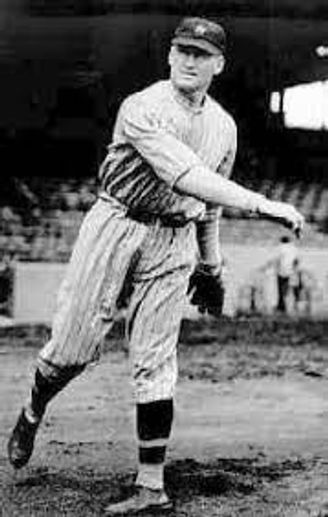
Walter Johnson:Walter Johnson, one of baseball's legendary pitchers, had a strong connection to Fullerton, California, where he settled and became a prominent community figure. His presence in Fullerton contributed significantly to the local baseball culture, embodied by Amerige Field, named after one of the city's founders. This field stands as a testament to the era of baseball giants like Johnson. Highlighting this rich baseball heritage, a memorable event took place near Fullerton in Brea: the celebrated Halloween baseball game in 1924, featuring Johnson and Babe Ruth. This game, a charity event, showcased a legendary duel between pitcher Johnson and hitter Ruth, epitomizing the pinnacle of early American baseball and reinforcing the significance of Fullerton and its neighboring areas in baseball history.